
Currently Empty: $0.00

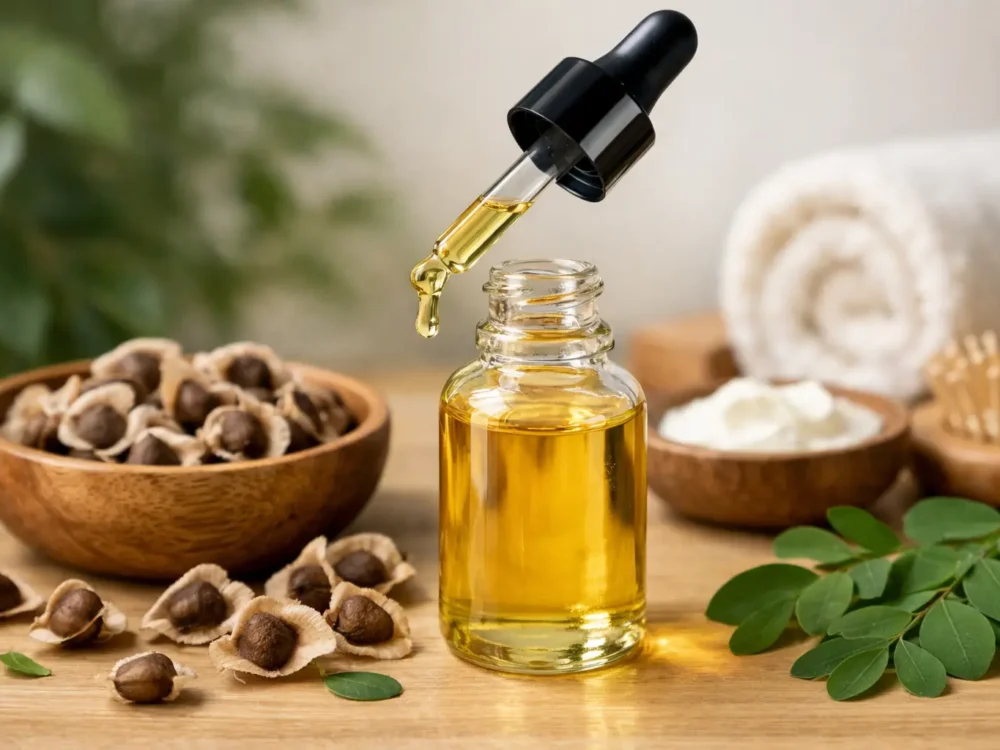
Moringa seed oil is one of those quiet overachievers in a wellness cabinet: light enough for daily use, rich enough to soften dry areas, and versatile enough to move from your face to your hair ends. If you are wondering how to use moringa seed oil, start with one goal rather than applying it everywhere at once. A simple, consistent routine makes it easier to see what your skin and hair actually respond to.
Often called ben oil, moringa seed oil is pressed from the seeds of the moringa tree. It is naturally rich in fatty acids, including oleic acid, which gives it its conditioning feel. The best use depends on your skin type, your hair texture, and whether you are looking for comfort, shine, or a barrier-supporting finishing step.
How to Use Moringa Seed Oil on Your Face
For most people, moringa seed oil works best as the final step in a nighttime routine. Oil does not add water to the skin, but it can help reduce the feeling of moisture loss by sitting over a water-based moisturizer or serum. Apply it to slightly damp skin or after moisturizer, not as a replacement for hydration.
Warm two or three drops between clean palms, then press them gently over your cheeks, forehead, and neck. Avoid vigorous rubbing, especially if your skin is irritated or freshly exfoliated. If you have combination skin, you may only need one drop on drier areas instead of applying it across the entire face.
People with dry or mature-looking skin may enjoy using it every evening. If your skin tends to be oily or break out easily, begin two or three nights a week. A plant oil can feel beautiful on the skin and still be too heavy for a particular person, so let your own results guide the frequency.
Try it as a moisturizer booster
If pure oil feels too rich, mix one drop into your usual fragrance-free moisturizer in your palm just before applying. This is a practical option for air-conditioned offices, cold travel, or periods when skin feels tight after cleansing. Mixing it fresh also lets you control the amount instead of committing to a heavier cream every day.
Do not mix moringa seed oil directly into an entire jar of moisturizer. Introducing oils, water, and fingers into a product can affect its formula and hygiene. Keep the routine clean and simple by blending each application in your hand.
Use It for a Softer, Smoother Body Routine
Moringa seed oil is especially useful on areas that lose comfort quickly: elbows, knees, hands, cuticles, shins, and feet. Apply a small amount after showering while your skin is still slightly damp. This helps the oil spread more easily and leaves less of a greasy finish.
For hands, one or two drops can be enough. Massage it into the backs of the hands, around the nails, and over dry knuckles before bed. For feet, apply a more generous layer to heels, then wear clean cotton socks overnight if you want a more intensive treatment.
It can also work as a finishing body oil over unscented lotion. This approach is ideal when you want both the water-based hydration of lotion and the rich, conditioned feel of an oil. Start small. Using too much does not make the routine more effective, and it can leave clothing or sheets feeling oily.
How to Use Moringa Seed Oil for Hair
On hair, the goal is usually softness, shine, and less roughness through the lengths. Moringa seed oil is not a replacement for shampoo, conditioner, or treatment products, but it can be an effective finishing step when used in the right amount.
For fine, straight, or easily weighed-down hair, begin with one drop. Rub it thoroughly between your palms and lightly smooth it over the bottom few inches of dry hair. Focus on ends and flyaways, not roots. Add another drop only if your hair still feels dry.
For thick, curly, coily, or textured hair, you may use a little more, particularly on damp lengths after leave-in conditioner. Work in sections and distribute the oil with your hands, concentrating on areas that feel brittle or lose definition. Hair that is prone to dryness often benefits from this layered approach: water or a water-based leave-in first, then a small amount of oil to help seal in that softness.
Make a pre-wash treatment when hair feels parched
A pre-wash oil treatment can be useful before shampooing, especially if your lengths feel rough from frequent washing, styling, or dry weather. Apply a modest amount through the mid-lengths and ends 20 to 30 minutes before washing. Then shampoo thoroughly and follow with conditioner.
This is not a case where leaving more oil on for longer is always better. Fine hair may look limp after a heavy treatment, while some scalp types can feel uncomfortable if oil is left at the roots for hours. Keep the first session light, then adjust based on how your hair cleanses and styles afterward.
Can You Apply It to Your Scalp?
You can use moringa seed oil on a dry scalp, but treat it as targeted care rather than an automatic weekly ritual. Place a few drops along dry sections, massage gently with fingertips, and wash it out later if your roots tend to get oily. A dry scalp and an oily scalp are not opposites in every case, so pay attention to flaking, itchiness, and product buildup rather than guessing.
Skip scalp oiling if you have active irritation, open scratches, a persistent rash, or a diagnosed scalp condition that needs medical care. Oil is not a treatment for dandruff, psoriasis, infection, or sudden hair shedding. If symptoms are ongoing, a dermatologist can help identify the cause rather than having you cycle through more products.
Choose an Oil That Fits Your Routine
A quality moringa seed oil should have a clear ingredient list and packaging that protects it from heat and light. Look for a product with moringa seed oil as the primary ingredient and avoid unnecessary fragrance if your skin is sensitive. Cold-pressed options are popular because they are minimally processed, though the most important factor is a well-made product stored properly.
A darker glass bottle is a practical choice, and a pump or dropper helps prevent overuse. Store the bottle in a cool, dry place away from direct sunlight. If the scent changes sharply or the oil develops an unpleasant rancid smell, it is time to replace it.
For shoppers building a clean, multipurpose routine, Sterling Nutrition’s approach to straightforward ingredients and everyday usability is worth prioritizing: choose products you can use consistently, not products that add complexity to an already crowded shelf.
Safety Checks Before You Start
Natural does not automatically mean suitable for every skin type. Perform a patch test before using a new oil on your face or scalp. Apply a small amount to the inner arm or behind the ear and wait 24 to 48 hours. Redness, itching, burning, bumps, or swelling are signs to wash it off and stop using it.
Keep moringa seed oil away from the eyes, and do not use it on broken skin. If you are pregnant, nursing, managing a medical condition, or using prescription topical treatments, ask a qualified health professional before adding a new botanical product to your routine. Most importantly, follow the product label. A topical cosmetic oil should not be swallowed unless the manufacturer specifically states that it is food-grade and provides directions for internal use.
Build a Routine You Will Actually Keep
The most effective way to use moringa seed oil is usually the least complicated one. Use two drops over moisturizer at night, smooth one drop through dry ends after styling, or massage it into cuticles before bed. Pick the use case that solves a real problem in your day.
Give that routine two weeks before deciding whether to use more or less. Skin and hair care reward consistency, careful observation, and products that fit naturally into the moments you already have.